Astrid Sampe
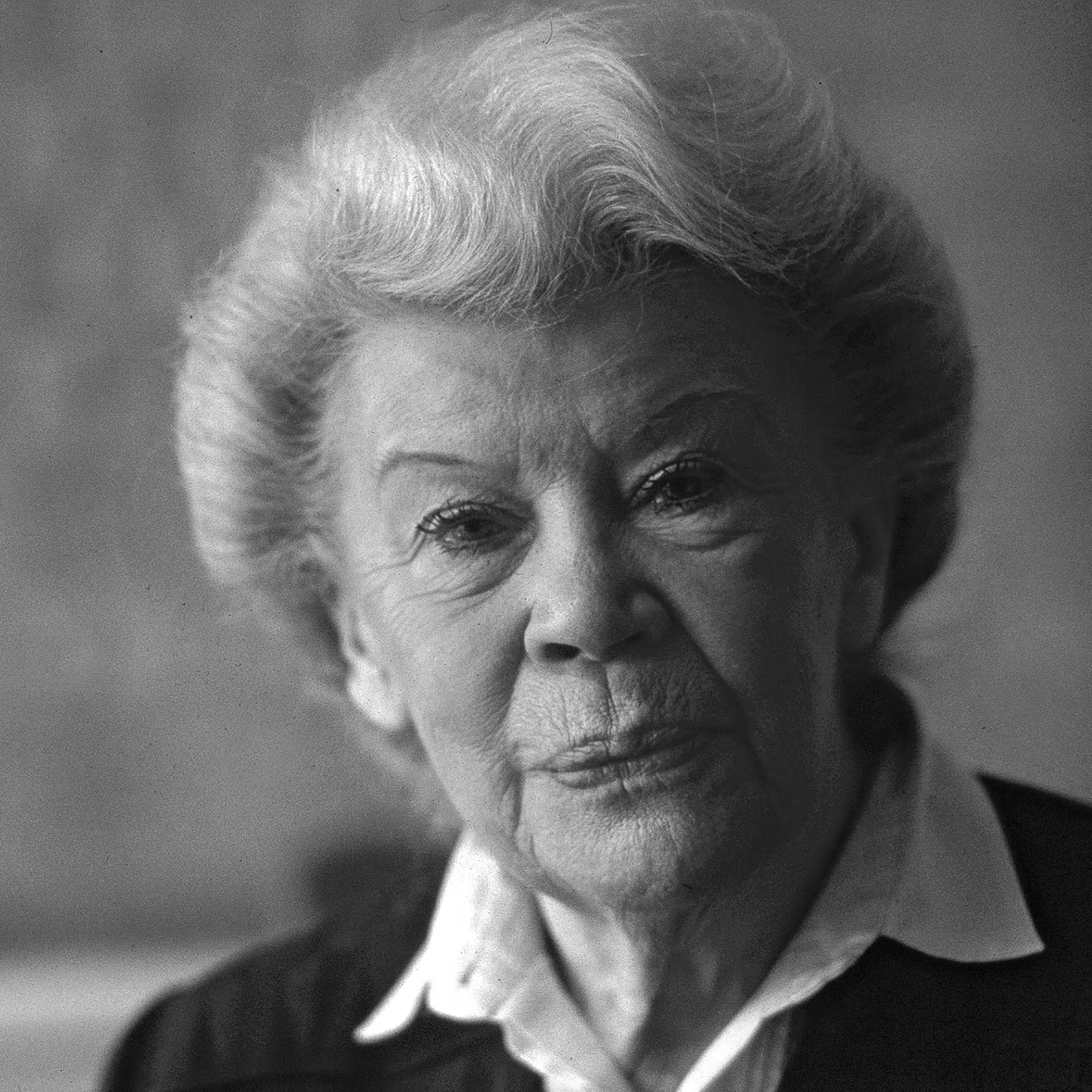
Is textile art herredary, Astrid Sampe? The English usually claim that it takes three generations to create a gentleman. One is tempted to believe in the importance of inheritance when you see what Astrid Sampe and the weaver brothers in Klässbol achieve. Astrid Sampe is the third generation in an old fine textile family from Borås. Her grandfather's name was Samuel Petterson, hence the internationally famous name Sampe. The Johansson brothers in Klässbol successfully run the linen weaving mill that their grandfather started more than 60 years ago.
Now Klässbol weaves Astrid Sampe's patterns Listing all the achievements and awards of our world-famous textile artist would take up an enormous amount of space. But as well-known as Astrid Sampe is, a few facts should suffice. After all, it is her work that speaks for itself.
Astrid Sampe was born in Stockholm in 1909 and since she was an only child, a textile career was probably quite obvious at an early stage. From 1928 to 1932 she studied at the Konstfackskolan in Stockholm and at the Royal College of Art in London. In 1937 she helped start the NK Textile Chamber, which she was the leader of until it was closed down in 1971. In 1937 she also managed to participate in the World Exhibition in Paris. In 1939 it was time for the World Exhibition in New York and in 1946 she arranged “Modern Swedish Home” at the London Building together with Elias Svedberg. In 1949 Astrid Sampe was appointed Royal Designer, Hon. RDI, by the Royal Society of Arts and in 1951 she had the first glass fibre fabrics woven. In 1954 she won the Grand Prix Triennale in Milan. In 1956 she received the Gregor Paulsson statuette. In 1957 she showed apartment interiors in Swedish housing estates at "Interbau" in Berlin, in 1959 she was commissioned to furnish the women's prison in Hinseberg, the Swedish embassy in Tokyo and other assignments for the Swedish Building Agency.
In 1961, she was commissioned by the United Nations to design carpets for the Dag Hammarskjöld Library in New York. In the same year, Astrid Sampe received the Order of Vasa. In 1963, she became a member of the American Institute of Interior Designers, AID. During the rest of the 1960s, she managed to arrange the exchange exhibition “Living off Trays” between the Council of Industrial Design and Peter Jones in London and the Swedish Institute and NK, redecorate the state residence at Haga Castle, decorate the M/S Saga, M/S Patricia and M/S Hispania and show a retrospective exhibition at Borås Museum. Astrid Sampe began the 1970s by making the first computer-based textile patterns in Sweden, and acting as a textile consultant for the interiors of Hotel Reisen, the Concert Hall and Trygg-Hansa’s new building, all in Stockholm. During the 1970s, Astrid Sampe also managed to be a consultant on the interior design of Borås' new cultural center, theater and museum, and in 1980 she was awarded HM the King's Medal, 8th size with a high blue ribbon. She began the 1980s by, among other things, participating as a consultant on the interior design of the Speakeranneresidence in the Riksdag building and the Speakerannerepresentative residence, and becoming an honorary member of KIF-STOK.
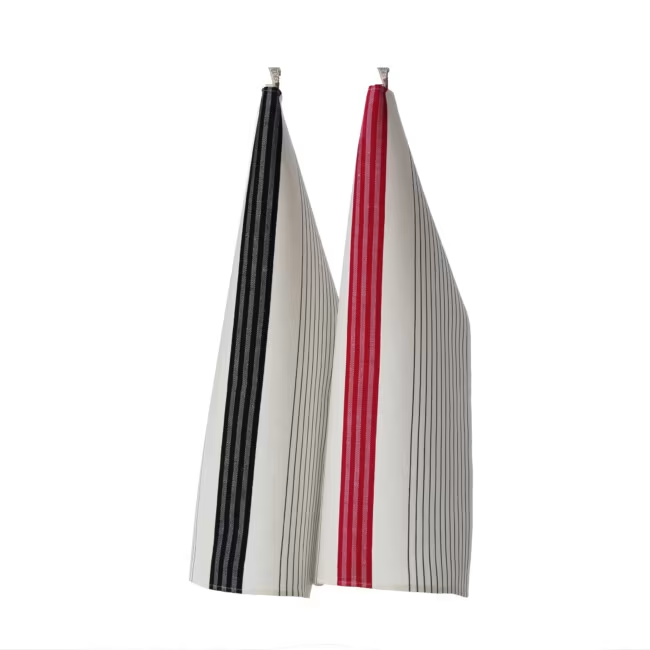
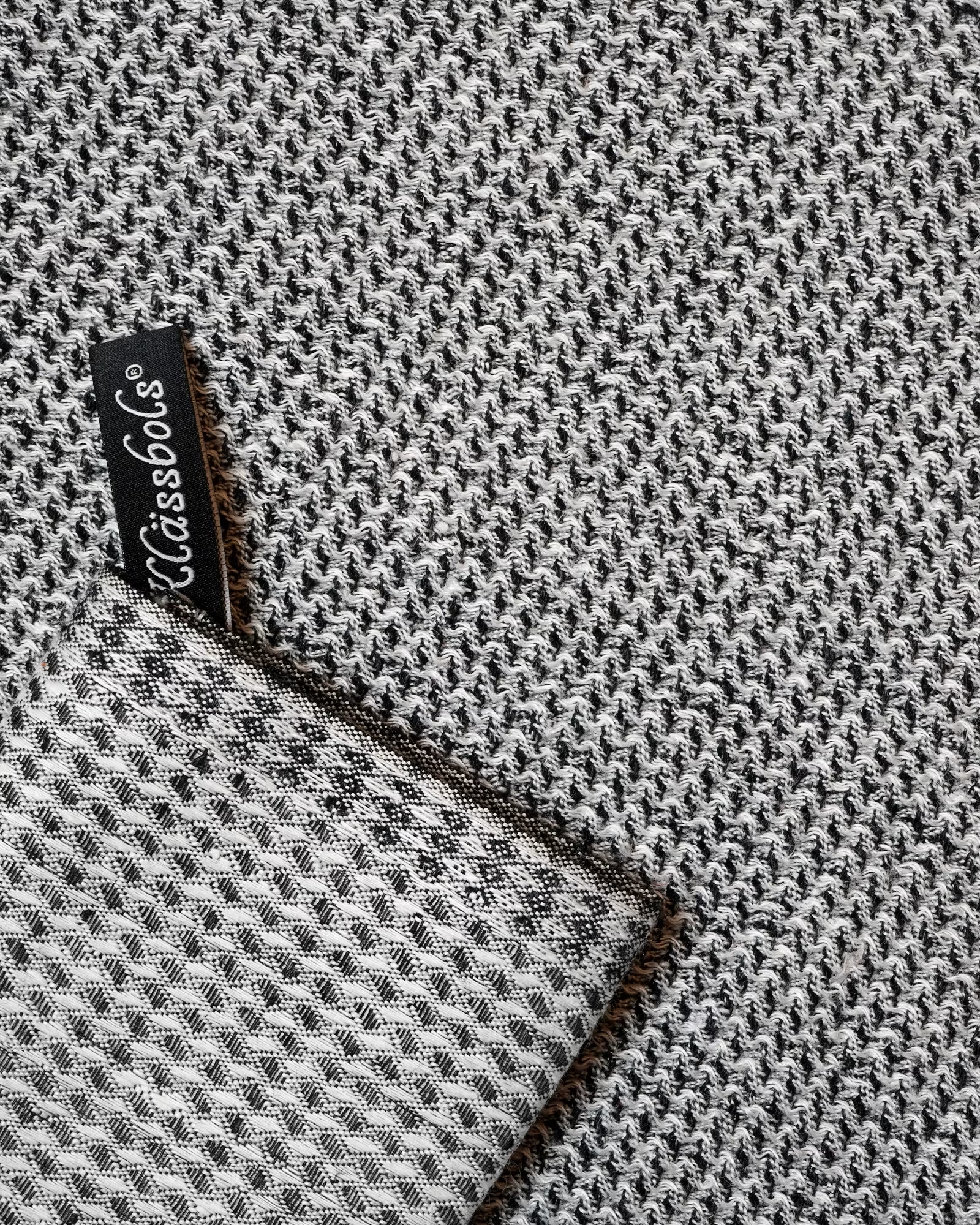
In the spring of 1984, Astrid Sampe was honored with an exhibition at the National Museum in Stockholm, "Astrid Sampe - Swedish Industrial Textiles". The exhibition was then shown during the summer at the Borås Art Museum. In 1984, the Friends of Handicraft awarded Astrid Sampe its medal, instituted by Sofie Adiersparre in 1874. After her death in 2002, her unique designs live on, among other things, through Klässbols Linneväveri.