
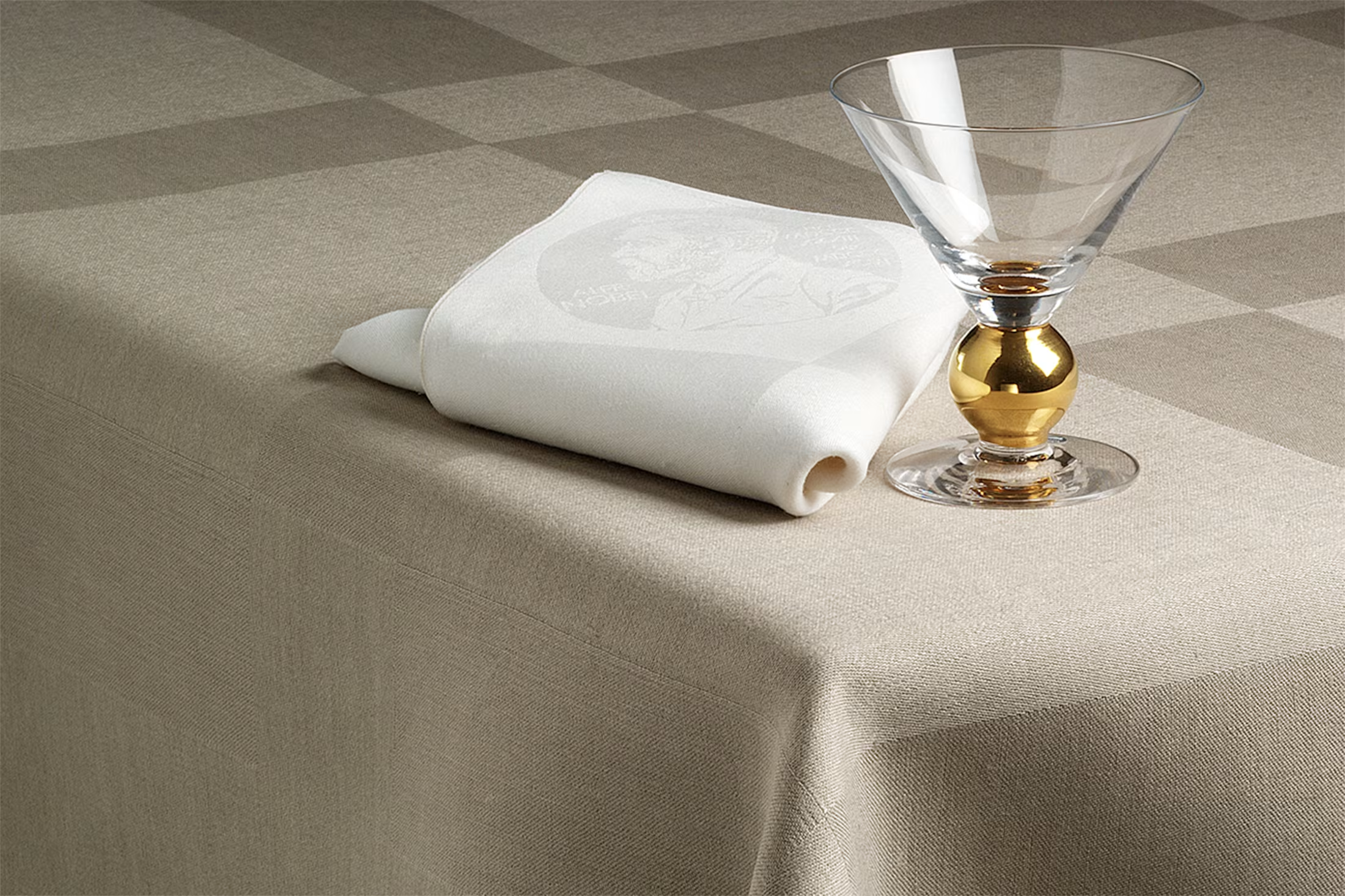
The Nobel table setting
Every December it is time for one of the world's most celebrated events – the Nobel Prize Party . Over a thousand guests are invited and during the evening they can enjoy a dinner of the finest kind at beautifully set tables. For the 25th year in a row, Klässbols Linneväveri is represented to the highest degree. This is done through 500 meters of tablecloths in the finest linen and 1350 generous napkins measuring a full 70×70 cm.
In 1991, the result of a unique collaboration between some of Sweden's most skilled designers and quality-conscious manufacturers was launched. The idea behind the project was the art historian Åke Livstedt and architect Magnus Silfverhielm. On behalf of the Nobel Foundation, a proposal for renewal was prepared, regarding both the ceremonial setting and the banquet itself, in preparation for the celebration of the Nobel Prize's 90th anniversary in 1991.
The decision was made to create completely new parts for the set table and Orrefors, Rörstrand, Gense and Klässbols Linneväveri were commissioned in their respective fields and Gunnar Cyrén, Karin Björquist and Ingrid Dessau were given responsibility for the design. The textile design was designed by Ingrid Dessau, an outstanding designer who had her artistic breakthrough in 1953 during a joint exhibition with Signe Persson Melin at Galerie Moderne in Stockholm. After this, she was appointed as the first designer at Kasthall and during her time there has signed several rugs in their collection
After we at Klässbols Linneväveri received our assignment, a major project took off and two looms were built for the purpose. All weaving was done on mechanical looms, one with jacquard and one in shaft, all in satin weave. The cloth loom was the widest in the company's history with a weaving width of 210 cm to cover the honorary table. No cloth was under 10 meters long and a total of 500 meters of cloth were used during the Nobel banquet. The napkins are generous and have the Nobel emblem woven into one corner. When setting the table, the napkin is placed on the plate and, through the special Nobel fold, the bread can be placed in it to keep warm until dinner. It was a time-consuming job to weave the 1350 napkins. A work that lasted for a year. A unique part of the project was that the tablecloths were to be woven with natural, unbleached, untreated linen. The reasons for this were partly from an environmental perspective, but also so that the unbleached, gray cloth would function as a stage for glass, porcelain, cutlery and flower arrangements.
On December 10th, it was time to set the stage for the world's most talked-about party for the 25th year in a row. An honorable assignment that we at Klässbols Linneväveri place great value on. Once again, 1,350 guests will enjoy a unique event and get to experience parts of our Swedish cultural heritage in the form of textiles, glass and porcelain.